Retail Divergence: Why Neighborhood Centers are Thriving While Big-Box Centers Struggle
OC retail vacancy is just 3.3%, but neighborhood centers are tightening while South County big-box power centers top 9%. Here's what investors should know.
Commercial Real Estate | Orange County, CA — October 5, 2026
Walk into any Orange County retail broker’s office right now and you’ll hear the same two-part story. Part one: the market is tight, rents are climbing, and good small-shop space gets leased before the “For Lease” sign finishes going up. Part two, usually delivered with a wince: the big boxes in the suburban power centers are not having the same party. Both statements are true at once, and understanding why is the difference between buying a durable cash-flowing asset and inheriting a redevelopment project you didn’t plan on.
The Headline Number Hides the Split
Start with the overall picture. Kidder Mathews’ Q3 2026 Orange County retail report puts vacancy at 3.3%, down 20 basis points from a year ago, with average asking rents at $2.77 per square foot per month, up about 4.5% year over year. CBRE’s first-quarter read was similarly tight, with availability at 3.9% and net asking rents of $2.56 NNN. Marcus & Millichap noted that Orange County was the only major Southern California metro where retail vacancy actually declined in 2025.
That’s a strong market by any measure. But a county-wide average is a blender, and the interesting information is in what went into it. According to Marcus & Millichap, neighborhood-center vacancy fell roughly 70 basis points to under 6%, while power-center vacancy in the southern suburbs rose roughly 140 basis points to over 9%. Same county, same quarter, opposite directions.
Why Neighborhood Centers Keep Winning
Neighborhood and grocery-anchored centers sell the one thing consumers can’t download: convenience. People still need groceries, a haircut, a dentist, a quick lunch, a place for the kids’ dance class. Those are daily and weekly trips, and they happen close to home. Marcus & Millichap’s phrasing is blunt and accurate: necessity uses and small-shop demand limit availability.
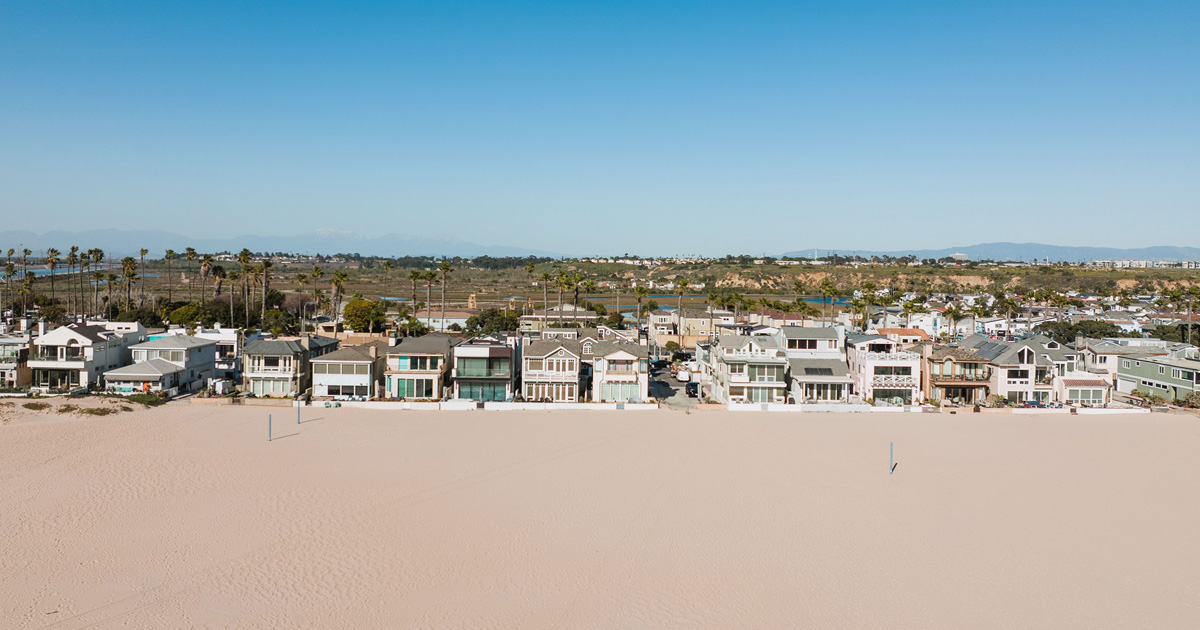
The tenant mix reinforces it. The OC Business Journal has documented the demand drivers for years: quick-service restaurants in sub-5,000-square-foot spaces, specialty grocers serving Asian and Hispanic communities, fitness and entertainment concepts, and medical and personal-service users. Those tenants fit comfortably in in-line shop space, and they’re hard to replace with a website. Santa Ana and Anaheim, where lower rents meet dense, loyal customer bases, have seen some of the strongest leasing, which tracks with the broader theme that cost-effective infill locations are capturing demand.
Supply discipline helps, too. CBRE reported just 5,000 square feet of new retail delivered in Q1 2026, and Kidder Mathews counts roughly 321,500 square feet under construction countywide. Land is scarce, construction costs are high, and the entitlement process is slow. New competition for your neighborhood center is, to put it mildly, not arriving in bulk.
Where the Big Boxes Are Struggling
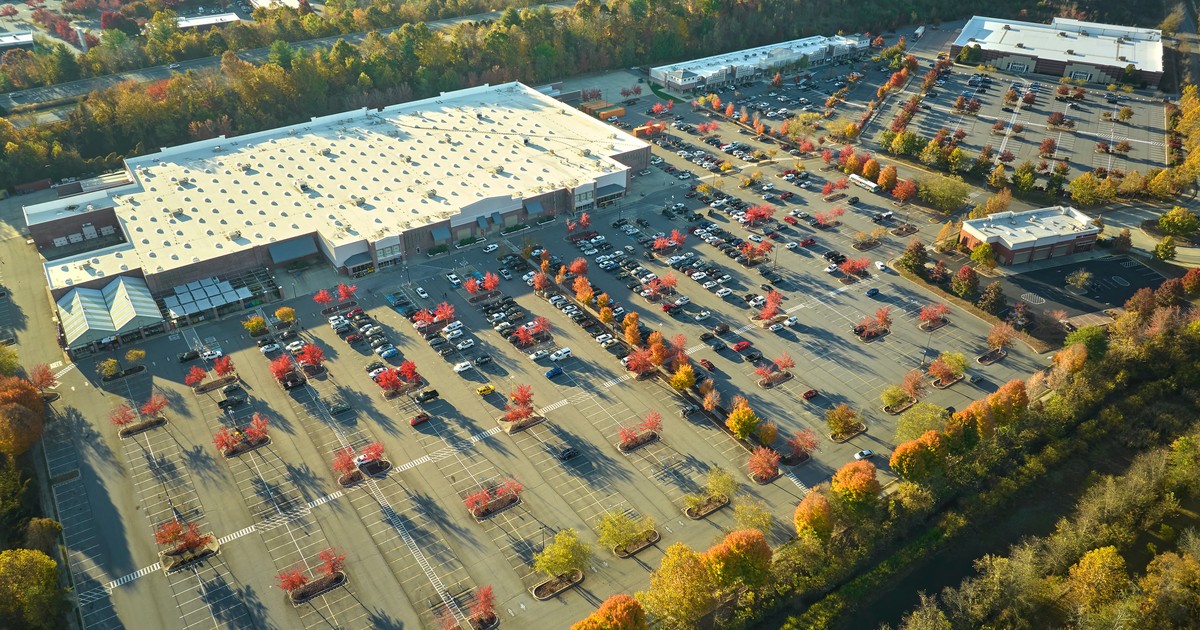
Large-format retail faces a harder equation. Big-box tenants carry big rent obligations, big parking fields, and big exposure to chain-level decisions made in a boardroom far from Orange County. When a national retailer rationalizes its fleet, a 40,000-square-foot box can go dark overnight, and backfilling it isn’t simple. Few tenants want that much space, and splitting a box costs real money for demising walls, new storefronts, utilities, and parking reconfiguration.
That’s the dynamic behind the vacancy jump in the southern suburbs’ power centers. It’s also why the market is quietly demolishing older formats. CBRE points to the ongoing teardown of obsolete shopping centers and large-format buildings, and the $107 million Westminster Mall sale in Q1 was earmarked for redevelopment rather than retail business as usual. Across the county, owners and developers have been swapping underperforming retail square footage for housing, a trend the OC Business Journal tracked across projects in Irvine, Santa Ana, Brea, and Laguna Hills.
What the Capital Markets Are Saying
Pricing tells the story investors believe. Kidder Mathews shows an average OC retail sale price of $546 per square foot and an average cap rate of 5.2%, up about 40 basis points year over year. CBRE reported total retail investment sales surging more than 75% to $436.1 million in Q1. Capital is flowing, but it’s getting pickier. A stabilized, grocery-anchored center with staggered lease expirations and a diversified shop mix underwrites very differently than a single-tenant box with a 2028 lease roll and a landlord who will need to spend capital to re-tenant.
Worth noting: a 5.2% average hides a wide range. The credit of the anchor, the remaining lease term, the trade area’s household income and density, and the functional layout of the site all move that number in either direction.
How to Think About Your Next Move
For buyers, the practical checklist is short. Underwrite the anchor first, because a grocer’s sales performance and lease term matter more than any pro forma rent bump. Look hard at the shop-space tenant mix and rollover schedule. And if you’re eyeing a big-box property, price it as a redevelopment or repositioning play, with a realistic budget and entitlement timeline, rather than as a stabilized income stream.
For owners of older or oversized retail, the question isn’t whether the market is strong. It’s whether your particular asset sits on the strong side of the divide. Some properties are worth more as retail; others may be worth more as something else entirely, and a candid valuation of both paths is worth having before you renew, sell, or sit.
The Bottom Line
Orange County retail is healthy, but it isn’t uniformly healthy. Necessity-driven neighborhood and grocery-anchored centers are riding tight supply and steady foot traffic, while big-box power centers in parts of South County are working through higher vacancy and tough backfill math. The winners will be the investors who read the property, not the headline average.
Thinking about buying, selling, or repositioning a retail property in Orange County? The Asbury Team can walk you through the numbers, submarket by submarket, with no pressure and no jargon. Reach out and let’s talk through your options.