Industrial Outdoor Storage (IOS): The High-Demand, Low-Supply Asset in Anaheim
Why industrial outdoor storage is Orange County's tightest commercial niche — Anaheim yard scarcity, 2026 cap rates, and how to underwrite an IOS deal.
Commercial Real Estate | Orange County, CA — August 11, 2026
There’s a three-acre lot off the 91 in Anaheim with no building on it. Chain-link fence, asphalt, a gate, some lighting. On paper it’s the least impressive commercial property you’ll tour all week. It’s also, on a dollar-invested basis, quietly outperforming the 60,000-square-foot warehouse next door.
Welcome to industrial outdoor storage — IOS, if you want to sound like you’ve been to the conference. It’s the least glamorous asset class in commercial real estate and, right now, one of the few in Orange County where the fundamentals are still moving in the owner’s direction. After two decades in this market, I’ve learned to pay attention when the boring stuff starts outperforming.
The Asset Nobody Zoned For
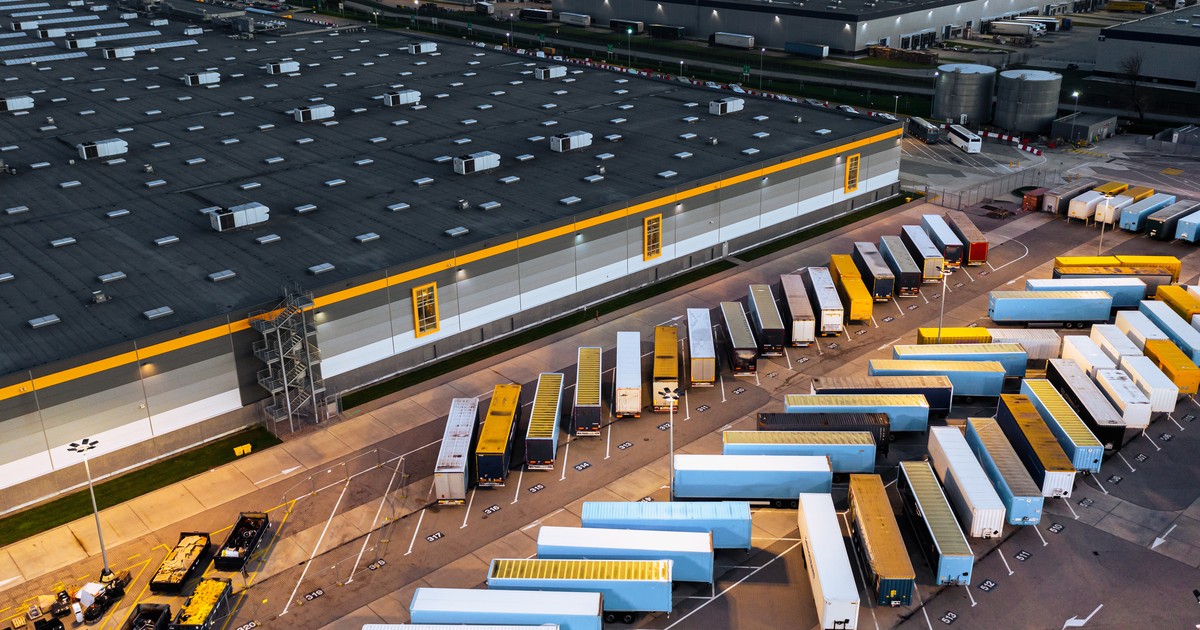
IOS is exactly what it sounds like: land used to store things that don’t need a roof. Trailers, containers, fleet vehicles, construction equipment, pipe, building materials. Sometimes there’s a small office or maintenance building. Mostly it’s yard.
Here’s why it’s scarce. Cities don’t like it. IOS generates truck traffic, produces less property tax than a vertical building on the same parcel, and tends to draw neighborhood opposition. So municipalities have quietly written it out of the code. Nationally, an estimated 30% to 50% of industrial-zoned land restricts IOS as a by-right use, and entitlement timelines commonly run 9 to 18 months — stretching past 24 months in the more restrictive jurisdictions. California cities are not known for being the permissive end of that range.
Now layer that on top of Orange County’s defining condition: we’re built out. There is no meaningful supply of new industrial land here. Every yard that exists today exists because it was grandfathered in, and every year a few more get sold to a developer who puts a building on them. The supply curve doesn’t just fail to grow — it shrinks. That’s a structural constraint, not a cyclical one, and it’s the whole investment thesis in a sentence.
The Divergence Nobody’s Talking About
The broader Orange County industrial market has softened, and the headline numbers say so plainly. Vacancy climbed to 5.1% in Q1 2026, up 110 basis points year over year, with average asking rents at $17.09/SF NNN annually — down meaningfully from the peak. Kidder Mathews clocked direct vacancy at 5.5% by Q3 2025 with asking rents off 6.3% year over year. If you only read those lines, you’d conclude industrial is having a rough stretch.
But the yard market didn’t get that memo. National IOS vacancy is running roughly 4% to 6% in primary markets, and for fully improved, paved, and secured sites in top metros it frequently sits below 4%. Rent growth tells the same story: roughly 8–10% in 2024, 7–9% in 2025, and a projected 6–8% for 2026 — a three-year compound rate near 8–9%.
Read those two paragraphs together and you’ve got the actual insight. Buildings and yards have decoupled. Tenants can find a warehouse in Orange County right now. They cannot find two acres of paved, fenced, legally permitted storage. Scarcity moved to the dirt.
Why Anaheim Is the Right Address
North Orange County — Anaheim, Fullerton, Buena Park — is the most active submarket in the county for small-bay industrial space, with asking rents in the $13–$17/SF NNN range. That’s not a coincidence. It’s geography.
Anaheim sits where the I-5, the 91, and the 57 converge. For a last-mile delivery operator, a regional contractor, or a fleet manager, that intersection is worth real money in fuel and driver hours every single day. Goodman’s Industrial Center Anaheim leases roughly 2.75 acres of outdoor trailer parking and site storage specifically on the strength of direct I-5 and 91 access — which tells you the institutional players have already priced this in.
The tenant base is also more durable than people assume. It isn’t just logistics. It’s electrical and plumbing contractors staging materials, landscaping companies, equipment rental yards, auto dealers overflowing inventory, and municipal fleet operations. These are businesses that need to be near their customers, and their customers are here.
What It Actually Pencils To
Orange County industrial traded at an average 4.9% cap rate in Q1 2026, with an average sale price near $307.82/SF. Stabilized IOS with NNN leases nationally trades in the 5.5% to 7.5% range — historically a 50 to 100 basis point premium over comparable warehouse product. Locally, value-add industrial in Anaheim and Santa Ana is penciling between 6.0% and 7.5% depending on condition, tenant quality, and how much capital the site needs.
That premium isn’t a risk signal so much as an inefficiency signal. IOS deals are smaller, ownership is fragmented and often generational, and there’s very little clean comparable data. Fewer institutional buyers show up. That’s precisely the kind of market where a well-prepared local buyer gets paid.
A word of caution, though, because this is where deals go sideways. Verify that the outdoor storage use is legally permitted and vested — not merely “existing nonconforming,” which can evaporate the moment the site sits idle or changes hands. Pull the paving, drainage, and stormwater permits. And understand that a separately deedable yard may trade at a different cap rate than the building it sits beside; underwriting them as one blended asset is a common and expensive mistake.
The Bottom Line
IOS is a supply story in a county that has run out of supply. The buildings market cooled; the dirt market didn’t, because you cannot manufacture more permitted yard in Anaheim. That gap is unlikely to close on its own — if anything, redevelopment keeps widening it.
The catch is that these deals rarely hit the open market, and the diligence is genuinely technical. Zoning verification, permit history, and site improvements determine whether you bought a cash-flowing asset or a lawsuit.
If you own a yard in North Orange County and haven’t had it valued in the last two years, you’re likely sitting on more equity than you think. And if you’re hunting for one, the Asbury Team knows which parcels are legally vested and which owners might listen to an offer. Reach out — we’re happy to walk your numbers.
Sources
- Orange County Industrial Market Research, Q1 2026 — Kidder Mathews
- Orange County Industrial Market Report — Kidder Mathews
- Orange County Commercial Real Estate Report 2026: Cap Rates, Demand, and Investment Outlook — Primior Group
- 2026 IOS Sector Update: State of the Market and Future Expectations — Matthews
- A Comprehensive Guide to Industrial Outdoor Storage — Northmarq
- Industrial Outdoor Storage: Structural Scarcity, Stretched Labels, and the Underwriting That Separates Them — Brevitas
- Goodman Industrial Center Anaheim — Trailer Parking & Storage Site
- Orange County Industrial & Warehouse Market Report, Q2 2026 — WareCRE