Adaptive Reuse: The Financial Realities of Converting Vacant Office Space
OC office vacancy is easing partly because obsolete buildings are being converted. Here's what actually makes an adaptive reuse deal pencil.
Commercial Real Estate | Orange County, CA — November 16, 2026
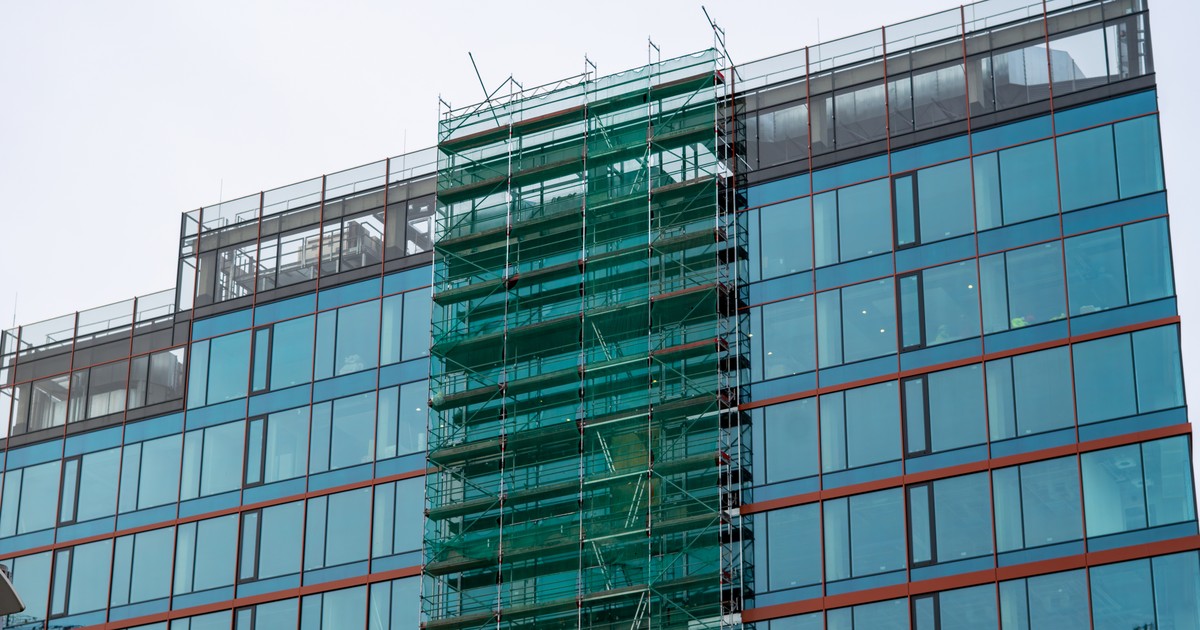
Every broker in Orange County has a building like this on their radar: a half-leased, 1980s mid-rise with a tired lobby and a landlord who has stopped fighting for tenants at any rent. For years the conversation around these assets was “when does leasing recover.” Increasingly, the conversation is “what else could this building be.” Adaptive reuse — turning vacant or obsolete office space into housing, medical, storage, or logistics use — has moved from a niche play to one of the more active corners of OC commercial real estate. But “the market wants this” and “the deal pencils” are two different questions, and the gap between them is where most conversion projects actually live or die.
The Vacancy Backdrop That’s Driving the Trend
Orange County’s office vacancy rate sat at 11.50% in the third quarter of 2026, down from 11.60% in Q2 and a meaningful improvement from 12.80% a year earlier, according to Lee & Associates’ Q3 2026 Orange County office report. That improvement is encouraging on its face, but the report credits part of it to “the redevelopment of obsolete office properties” — in other words, vacancy is falling partly because older buildings are being pulled out of the office inventory altogether, not because tenants are filling them back up. Average asking rents climbed to $3.03 per square foot, up 4.6% year over year, with premier buildings pulling away from the broader market. That bifurcation is exactly the setup that makes conversion attractive: Class A assets keep getting stronger while aging Class B and C stock gets left behind, with fewer paths back to viable office use.
Why Orange County Is Outpacing Los Angeles
According to CBRE data reported by The Real Deal, Orange County had 4.2 million square feet of office conversions and redevelopments planned or under construction as of mid-2025, more than triple what Los Angeles County had at the time, ranking OC seventh nationally among 58 markets and the only California market in the top ten. By the end of 2025, OC’s pipeline had settled to 3.8 million square feet, with L.A. closing the gap at 3.3 million after a surge in Culver City, Long Beach, and Pasadena. OC has kept its edge for a few structural reasons: its 34 cities tend to be more development-friendly than the City of Los Angeles, its office stock is generally newer and easier to bring up to code, and it doesn’t carry anything like L.A.’s Measure ULA transfer tax, which one developer quoted in the piece called a real deterrent to actually breaking ground, even on projects that pencil on paper.
Why the Deal Has to Pencil Before It Gets Permitted
AB 2011, California’s by-right law for converting underused commercial parcels into housing, has removed a lot of the entitlement risk that used to kill these projects before they started — the malakaisparks brokerage notes it’s specifically enabling residential conversions along transit-heavy corridors like Santa Ana, Anaheim, and Stanton. But faster permitting doesn’t fix the financing math. As CLS CRE’s early-pattern review of AB 2011 deals points out, nearly every transaction shows a gap between the conversion’s actual cost basis and the debt the finished project can support. Fully affordable projects lean on LIHTC equity and subordinate soft debt; market-rate and mixed-income deals without tax credits depend on specialty debt funds and life insurance lenders whose underwriting is sensitive to interest rates, and deals penciled 18 to 24 months ago are now being re-underwritten at today’s cost of capital. Closing that gap typically takes some combination of a discounted land basis, a seller carryback, or patient subordinate capital from a public agency — not just a favorable zoning letter.
The Building Itself Decides More Than the Zoning Does
Not every empty office tower is a housing candidate, and the building’s bones matter more than its address. Floor plate depth, the location of the structural core, and window-line spacing determine whether units can actually get natural light and workable layouts — a deep, windowless floor plate kills a residential conversion regardless of how favorable the entitlement path is. Vintage matters just as much on the cost side: per The Real Deal, one OC conversion candidate, a 1986 building being eyed for student housing, is estimated to need $500,000 to $1 million in seismic upgrades, versus $5 million to $10 million for an older structure. That single variable can be the difference between a deal that works and one that doesn’t. On the acquisition side, discounted office sales in the $100 to $200 per square foot range have been showing up across the county, a basis low enough to make multifamily redevelopment math work in a way a full-price office trade never could.
Beyond Housing: Medical, Storage, and Flex Conversions
Residential isn’t the only reuse story in play. South County’s aging single-story and garden-style office parks in markets like Laguna Hills and Mission Viejo are increasingly attractive to medical users, who typically sign long-term, 10- to 15-year absolute NNN leases that offer far more income stability than a rolling office tenant base. Multi-story buildings with higher floor-load capacity in Fullerton and Placentia are seeing interest for self-storage and flex-logistics use. None of these paths involve AB 2011’s residential streamlining, but all of them share the same underlying driver: an owner doing the math on a half-empty building and concluding that a change of use beats another year of chasing office tenants at a discount.
The Bottom Line
Adaptive reuse in Orange County isn’t a fringe strategy anymore — it’s a measurable share of the commercial pipeline, and the county’s development-friendly cities and newer building stock have put it ahead of Los Angeles by a wide margin. But the legislative path being easier doesn’t make the financial path easy. Every credible conversion still comes down to the same underwriting questions: what’s the acquisition basis, what does the building’s structure actually allow, and who is willing to hold the gap between cost and supportable debt. If you own, or are evaluating, a vacant or underperforming office asset in Orange County, the Asbury Team can help you pencil out whether a sale, a reposition, or a change-of-use conversion gets you the best outcome. Reach out and let’s run the numbers together.